
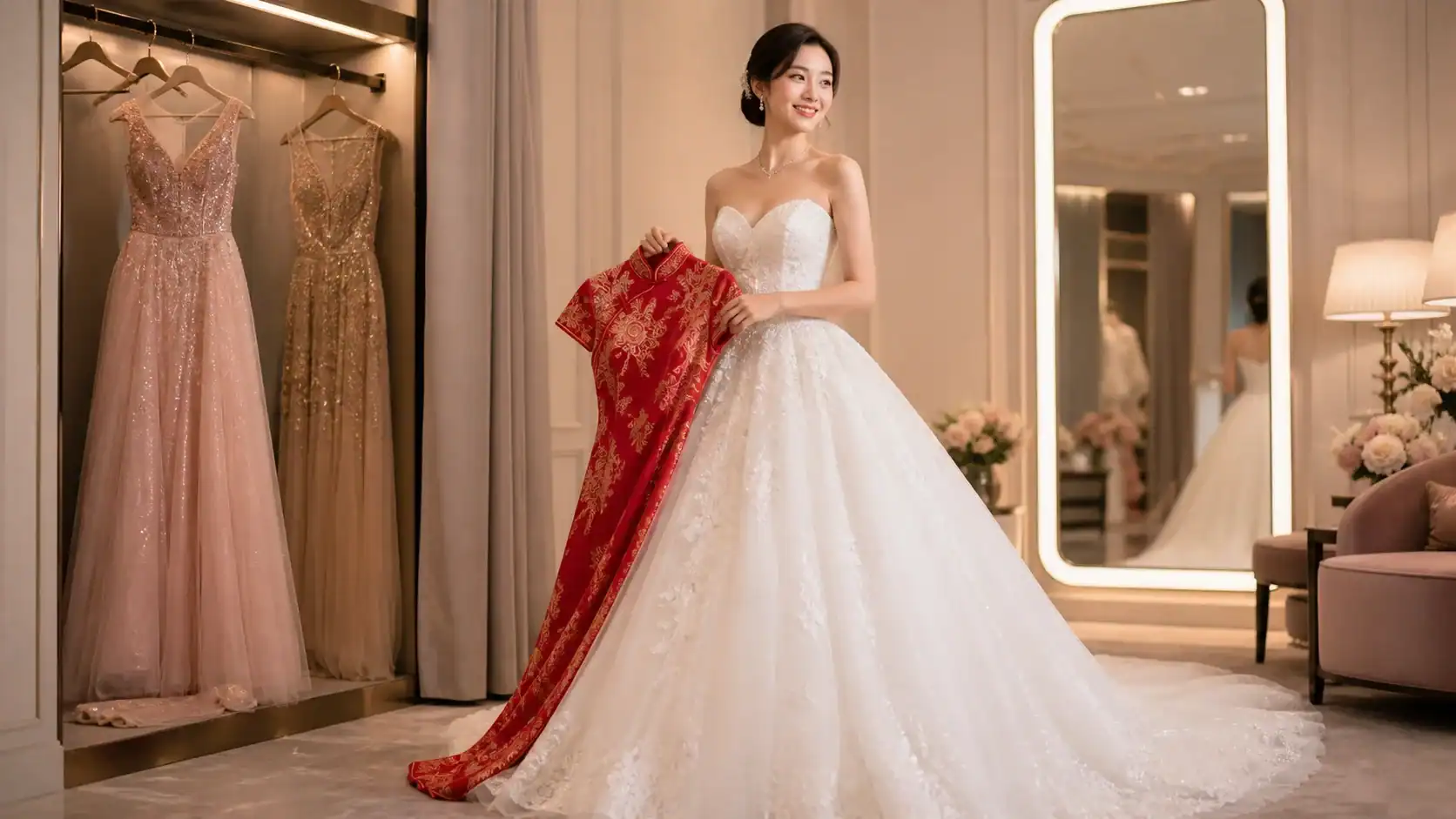
Planning a Singapore wedding means making dozens of decisions, but one question comes up in almost every bridal consultation we have at House of Ivory: how many outfits do I actually need? The answer isn’t one-size-fits-all. It depends on your ceremony structure, cultural traditions, venue, and how much of your day you want to spend in a changing room.
Most Singapore weddings involve at least two outfit changes, and many include three or more. With a median wedding spend of S$30,000 to S$50,000 in 2025 (Empathy Weddings, 2025), your outfits can represent 10 to 15 per cent of the total budget. Getting the planning right from the start saves you money, stress, and precious time on the day.
This guide walks you through every outfit moment in a Singapore wedding, from the ROM ceremony through to the banquet and beyond, with practical timelines, cost estimates, and styling advice to help you plan with confidence.
Key Takeaways
|
What Is the Typical Number of Outfit Changes at a Singapore Wedding?
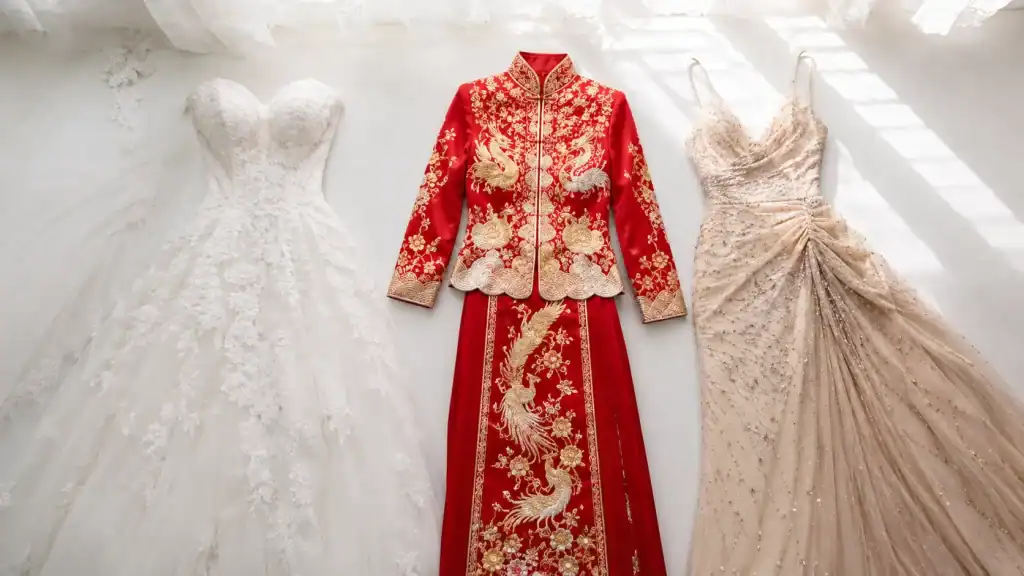
Most Singapore weddings include two to three outfit changes, though there is no fixed rule. According to wedding planning consultants in Singapore, the number typically aligns with how many distinct ceremony moments a couple has planned. A ROM-only couple with a small dinner will often do just two looks. A couple with a tea ceremony, solemnisation, and full banquet may comfortably move through three or four.
The key question isn’t how many looks are traditional, but how many moments you want to mark. Each outfit change signals a shift in the day, from the formal and ceremonial to the celebratory. When you plan them well, they add to the narrative of your wedding rather than interrupting it.
Ceremony Format | Typical Outfits | Recommended Looks |
ROM only (intimate) | 1 to 2 | ROM dress + optional reception change |
Solemnisation + banquet | 2 | Ceremony gown + evening look |
Tea ceremony + solemnisation + banquet | 3 | Kua or cheongsam + ceremony gown + evening look |
Full traditional + multi-event | 3 to 4 | Tea ceremony + ROM + banquet + after-party look |
At House of Ivory, we generally guide brides towards the number of outfits that reflects their ceremony structure, not the maximum they can fit into a day. More changes don’t always mean more moments, and your guests, your photographer, and your own energy will thank you for choosing thoughtfully.
What Should You Wear for Your ROM or Solemnisation?
The Registry of Marriages (ROM) ceremony is often an intimate, low-key affair, and your outfit should reflect that. Many brides opt for a shorter dress, a tea-length gown, or a structured midi rather than a full bridal gown. That said, if your solemnisation is your main event, with a large guest list and a beautiful venue, a full gown is entirely appropriate.
ROM ceremonies in Singapore are typically held indoors in a government building or at a preferred venue, and last around 30 minutes. The practical considerations are worth thinking through: you’ll be standing, sitting, signing documents, and moving around for photos. Comfort matters.
Practical tip: Fabric choice is important in Singapore’s climate. Lightweight lace, chiffon, and crepe perform well in heat and humidity. Avoid heavy satin or thick boning if you have outdoor photography planned, as these can become uncomfortable quickly.
ROM Dress Style | Best For | Key Consideration |
Short or midi dress | Intimate ROM, courthouse setting | Easy to move, photogenic in compact spaces |
Tea-length gown | Garden or boutique venue | Elegant without the full bridal commitment |
Full bridal gown | Solemnisation as main event | Budget impact, manage heat with lightweight fabric |
Coordinated set or jumpsuit | Modern, non-traditional couples | Comfort-first, works for outdoor venues |
For brides who want guidance on how to balance the ROM look with their main ceremony gown, our personalised styling consultation at House of Ivory is a great starting point. We help you think through the whole day, not just one outfit at a time.
What Do You Wear for the Tea Ceremony?
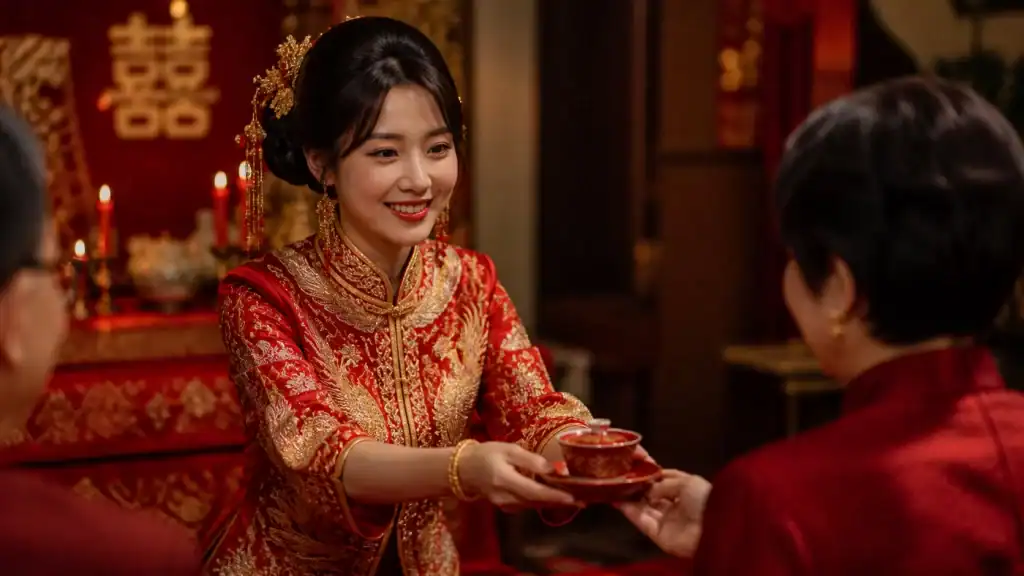
The tea ceremony is one of the most culturally significant moments in a Chinese Singapore wedding, and the outfit worn during it carries meaning. Most brides choose either a traditional kua (a two-piece embroidered set in red and gold) or a cheongsam, depending on their family’s preferences and their own aesthetic.
The kua is the more formal and traditional choice, often associated with family heritage and blessing rituals. Cheongsams offer a more modern silhouette with the same cultural resonance. Both are typically rented rather than purchased, as they’re worn for a relatively short portion of the day.
Cost note:
When renting a kua or cheongsam in Singapore, rental prices typically range from S$300 to S$800, depending on the level of embroidery, quality of fabric, and boutique. Some bridal boutiques, including House of Ivory, stock both Western gowns and traditional Chinese pieces, allowing you to manage your entire outfit planning through one consultation.
For a deeper look at traditional tea ceremony dress options, see our guide on cheongsam styles at House of Ivory.
One consideration many brides don’t think about until the day itself: the tea ceremony often happens early in the morning before the main ceremony, which means your HMUA (hair and makeup artist) will need a clear brief on how your look needs to transition between outfits. Discuss this with your styling team well before the wedding date.
Choosing Your Main Wedding Gown: Ceremony and Banquet
The wedding gown worn for your ceremony and banquet is typically the most significant outfit decision of the day. In Singapore, where banquets are often held in hotel ballrooms seating 200 to 400 guests, the gown needs to hold its presence in a large, well-lit space and photograph beautifully across an entire evening.
Brides who purchase a wedding gown in Singapore spend anywhere from S$1,500 to S$10,000 or more, depending on the designer and level of customisation. Rental options start from around S$800 and can reach S$3,000 or more for luxury labels. At House of Ivory, our curated collection spans six exclusive designer lines, allowing brides to find a gown with true editorial quality at a range of price points.
If you’re working through the rent vs buy decision, our detailed guide Rent or Buy a Wedding Dress in Singapore covers the financial and practical factors in full.
When brides come in for a consultation, having already decided on a silhouette, we often find the real conversation is about the second look, not the first. Many brides who plan a reception outfit change discover that the gown they first fell in love with for the ceremony works better as the banquet look, and the lighter, more relaxed piece becomes the ceremony gown. Keeping an open mind across both looks produces better results.
Silhouette | Best for Singapore Venues | Considerations |
Ballgown | Grand hotel ballrooms (e.g., Fullerton, Marina Bay Sands) | Heavy for outdoor settings; stunning for large-scale banquets |
A-line | Versatile across all venue types | Flattering on most body types; easy to move in |
Fit-and-flare | Boutique venues, garden settings | Romantic silhouette; work well in smaller spaces |
Sheath / column | Modern minimalist venues | Cool and streamlined; excellent for Singapore heat |
Mermaid | Formal hotel banquets | Dramatic impact; limited mobility for quick changes |
Do You Need a Second Evening Look for the Reception?
A second look for the banquet or reception is one of the most popular outfit additions for Singapore brides. It’s typically a lighter, more relaxed gown than the main ceremony piece, chosen for comfort during the dinner, guest interaction, and dancing portion of the evening. It also gives photographers a fresh look for the candid reception shots.
The reception change is usually the most flexible outfit decision in the day. It can be as simple as removing a ballgown overskirt to reveal a shorter dress underneath, swapping to a cheongsam, or changing into a completely different gown in a complementary colour palette.
Budget tip:
Budget-conscious brides often find that the second look is the easiest place to save. A rental gown in the S$500 to S$1,200 range can work beautifully as a reception piece when the main ceremony gown is where the investment is concentrated.
Our blog post on what to wear for your wedding dinner in Singapore covers the specific style options for second looks in detail, including cheongsam choices and after-party dresses.
How Do You Manage the Timing of Multiple Outfit Changes?
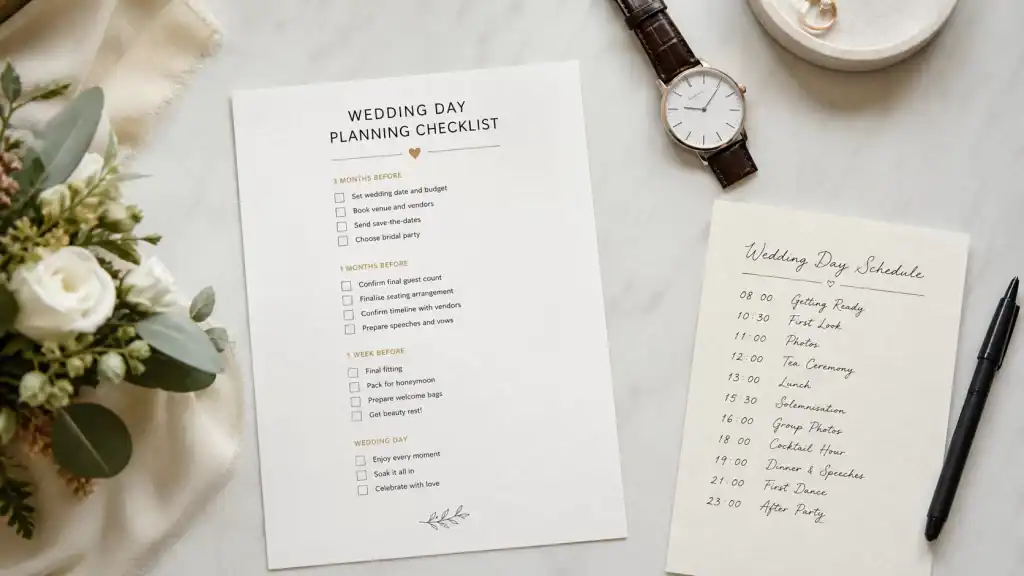
Each outfit change at a Singapore wedding typically takes 20 to 30 minutes when properly planned, including hair and makeup adjustments. For three changes across a full wedding day, that’s up to 90 minutes of transition time built into the schedule. Working with your wedding coordinator and HMUA to map this out in advance is essential.
Change | Estimated Time | When in the Day |
Tea ceremony kua to the ceremony gown | 20 to 30 min | Before solemnisation or early morning |
Ceremony gown to reception look | 15 to 20 min | During first dinner course or cocktail hour |
Reception to after-party look (if applicable) | 10 to 15 min | Post-dinner, before dancing |
Practical steps to keep changes smooth:
- Brief your HMUA specifically on which look follows which, and what adjustments are needed (e.g., a lower updo for the cheongsam’s neckline).
- Assign one bridesmaid or your coordinator to manage the changing room and keep each outfit ready.
- Store accessories for each look in a clearly labelled pouch so nothing is misplaced between changes.
- Do a trial run of your timeline during the rehearsal or consultation, particularly if your ceremony and banquet are at different venues.
For a more detailed breakdown of two vs three outfit strategies with sample schedules, see our guide on2 outfits vs 3 outfits for Singapore weddings.
What Should You Budget for Multiple Outfits?
Brides in Singapore typically allocate 10 to 15 per cent of their total wedding budget to outfits. With most Singapore weddings costing between S$30,000 and S$50,000 in 2025 (Empathy Weddings, 2025), that puts the typical bridal outfit budget at S$3,000 to S$7,500 across all looks. For luxury boutiques, this range can extend significantly depending on gown selection.
Outfit | Rental Range (SGD) | Purchase Range (SGD) |
Main ceremony gown | S$800 to S$3,000 | S$1,500 to S$10,000+ |
Kua (tea ceremony) | S$300 to S$800 | S$500 to S$2,000 |
Cheongsam | S$200 to S$600 | S$400 to S$1,500 |
Reception/evening change | S$500 to S$1,200 | S$800 to S$4,000 |
ROM dress (if separate) | S$150 to S$500 | S$300 to S$1,500
|
Based on the consultations we conduct at House of Ivory, brides who plan all their looks through a single boutique consistently save time and often money, because they can consider the full outfit picture together rather than making individual decisions in isolation. Seeing your ceremony gown, reception look, and traditional piece side by side gives you a much clearer sense of whether they work as a set.
For a full breakdown of how rental costs add up across a multi-outfit wedding, our post on the true cost of wedding gown rental in Singapore covers every fee to factor in.
How Do Singapore Wedding Dress Codes Affect Your Outfit Choices?
Singapore weddings often involve guests from multiple cultural backgrounds, which means dress code communication matters for everyone involved, not just the bride. The outfit choices you make as a bride also set the tone for the formality of the event, signalling to guests what to expect.
For multi-ceremony weddings, it’s common to specify different dress codes for different parts of the day. Tea ceremony guests may be asked to dress in traditional attire or smart casual, while banquet guests are expected to be in formal or semi-formal. Communicating this clearly on your invitation or wedding website prevents confusion and sets the right atmosphere.
For a full guide to Singapore wedding dress codes across all ceremony types, see our post on Singapore wedding dress codes, which covers guest attire expectations for tea ceremonies, solemnisations, and banquets.
Ready to Plan Your Wedding Outfits?At House of Ivory, we offer personalised styling consultations designed to help you plan your full bridal wardrobe, not just one gown. Whether you’re navigating a three-outfit day or deciding between renting and buying your main gown, our team will guide you through every decision with care. Book a consultation at our flagship showroom at 36 Armenian Street, Singapore. |
Frequently Asked Questions
How many outfits does the average Singapore bride wear?
Most Singapore brides wear two to three outfits on their wedding day. Couples with a tea ceremony, solemnisation, and banquet typically plan three distinct looks. Those with a ROM-only celebration often do one or two. The number should reflect your ceremony structure, not a fixed expectation.
Can I wear the same gown for both my solemnisation and banquet?
Yes, and many brides do. Wearing one gown for both events simplifies logistics and concentrates your budget on a single, beautifully chosen piece. If you want visual variety, a detachable overskirt, veil, or accessory change can refresh the look between ceremony and dinner without a full outfit change.
How long does each outfit change take at a Singapore wedding?
Each outfit change typically takes 20 to 30 minutes, including hair and makeup adjustments. Build this into your wedding day timeline with your coordinator. If your changes require significant hair restyling, allow up to 45 minutes to avoid feeling rushed.
Should I rent or buy my tea ceremony kua?
Most brides rent their kua or cheongsam, as these are worn for a relatively short portion of the day. Rental prices range from S$300 to S$800 in Singapore. Purchasing makes sense if the piece has significant family or sentimental value, or if you plan to keep it as an heirloom.
What is the best fabric for Singapore wedding outfits in the heat?
Lightweight fabrics, including chiffon, organza, crepe, and soft lace, perform best in Singapore’s tropical climate. These breathe well, photograph beautifully, and remain comfortable across a long wedding day. Heavy satin and thick boning are best reserved for shorter, air-conditioned ceremony moments.