

 My Account
 Wishlist
 (0)
(0)
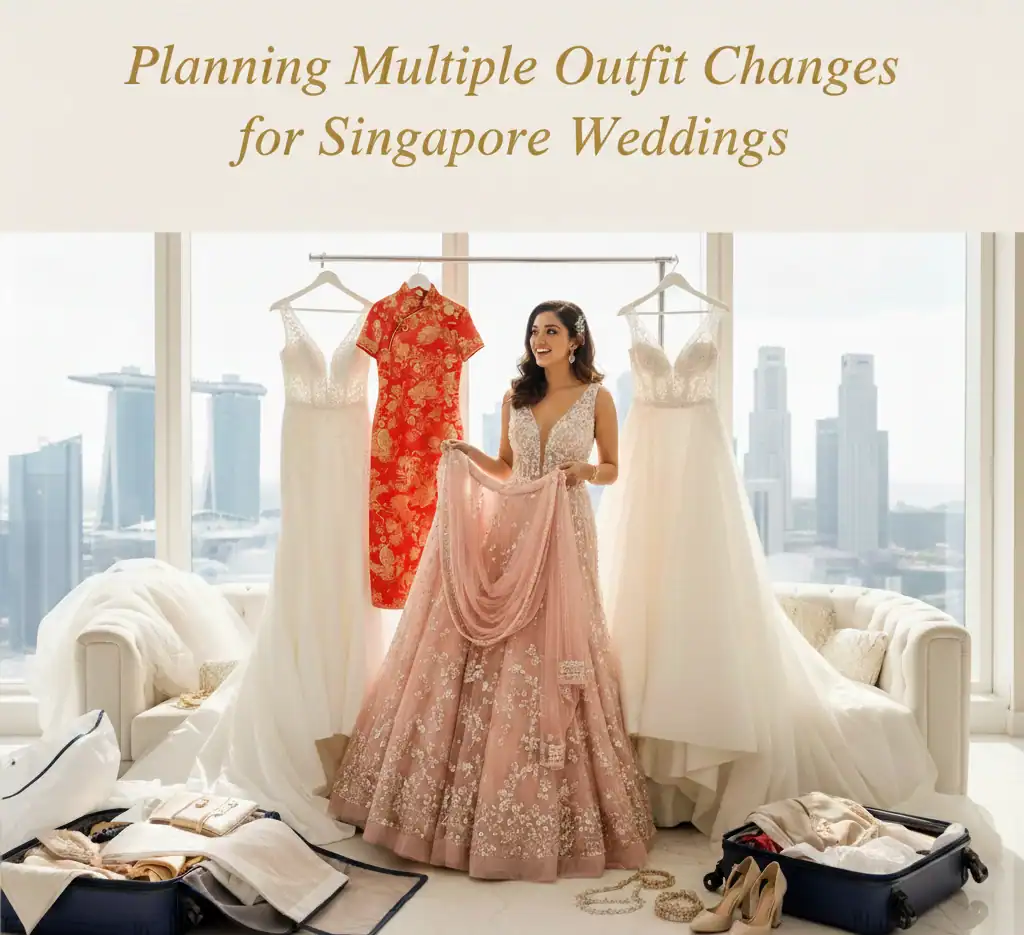
Planning Multiple Outfit Changes for Singapore Weddings
12th Feb 2026
Singapore weddings are known for their rich traditions, elegant celebrations, and thoughtfully planned programmes. One unique aspect of weddings in Singapore is the inclusion of multiple outfit changes throughout the day, allowing couples to honour culture, adapt to different moments, and showcase varied styles from ceremony to celebration.
From Western gowns and suits to traditional attire and reception looks, planning multiple outfit changes requires coordination, foresight, and a clear understanding of how each look fits into the overall wedding experience.
Why Multiple Outfit Changes Are Common in Singapore Weddings
Many Singapore weddings include solemnisation ceremonies, tea ceremonies, wedding dinners, and after-parties. Each segment carries a different tone and level of formality, making outfit changes both practical and meaningful.
Typical Wedding Outfit Changes Across the Day
The day often begins with a Western wedding gown and suit or tuxedo for the ceremony. Traditional attire such as a cheongsam, kebaya, sari, or barong is commonly worn for tea ceremonies or the dinner reception. Many couples then change into a second gown or relaxed suit for the evening celebration.
Deciding How Many Outfit Changes You Need
There is no fixed rule on the number of outfit changes. Some couples choose two outfits, while others plan three or more, depending on programme length, venue logistics, and personal comfort.
Creating a Cohesive Look Across Multiple Outfits
While styles may change throughout the day, cohesion comes from repeating colour tones, fabric textures, or key accessories across all outfits, something brides often achieve through custom wedding gowns in Singapore designed by House of Ivory.
Prioritising Comfort and Practicality
Singapore’s warm climate makes breathable fabrics and ease of movement essential, particularly for later outfits worn during the dinner or after-party.
Planning the Logistics of Outfit Changes
Designated changing areas, organised accessories, and coordination with the wedding planner help ensure smooth transitions.
Start Styling Early and Seek Professional Guidance
Early planning allows time for fittings, styling coordination, and professional advice to ensure each outfit flows seamlessly into the next.
Planning more than one wedding outfit in Singapore? Book a styling consultation with House of Ivory and let our stylists help you curate a cohesive bridal wardrobe for every moment of your wedding day.
How many outfit changes are typical for Singapore weddings?
Most Singapore weddings include two to three outfit changes, covering the ceremony, traditional segments, and the wedding dinner or reception.
When should outfit changes happen during the wedding day?
Outfit changes usually occur between key programme segments, such as after the ceremony, following tea ceremonies, or before the wedding dinner.
Do both the bride and groom need to change outfits?
While brides often change outfits, many grooms also change suits or switch into traditional attire to maintain a coordinated look.
How can I keep multiple wedding outfits cohesive?
Using consistent colours, complementary fabrics, and coordinated accessories helps maintain cohesion across different looks.
When should I start planning multiple wedding outfits?
Planning should begin early in the wedding preparation process to allow time for fittings, styling, and coordination.
