
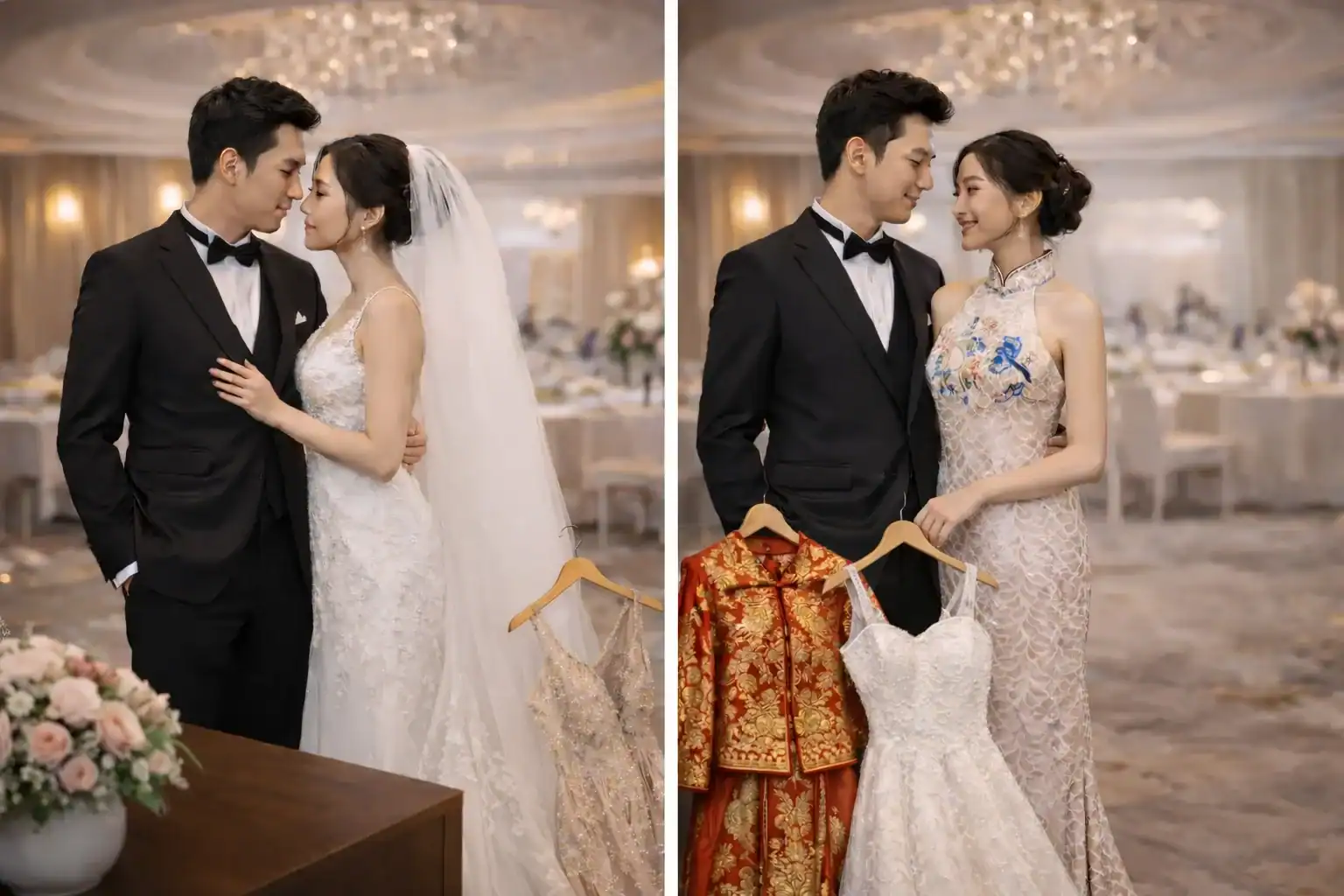
Deciding on your wedding attire strategy is a key part of planning; the answer to 2 Outfits vs 3 Outfits: Which Singapore Wedding Strategy is Best? depends on your priorities for budget, timeline, and personal expression.
The 2-Outfit Strategy: Offers a more relaxed timeline, lower costs, and more time with guests. Ideal for couples prioritizing experience over variety.
The 3-Outfit Strategy: Allows for distinct looks for the ceremony, banquet, and after-party, showcasing different facets of your style and heritage.
Key Factors: Your decision should be guided by your venue’s logistics, cultural traditions (like the tea ceremony), and coordination with your vendor team.
Table of Contents
Introduction
You are planning your dream Singapore wedding, but one question keeps surfacing—how many outfits are right for you? The choice between a streamlined two-outfit day and a glamorous three-outfit celebration is one of the most significant decisions you will make. It impacts your budget, your timeline, and ultimately, how you experience the day. This guide is designed to move beyond generic advice, offering a uniquely Singaporean perspective to help you decide: 2 Outfits vs 3 Outfits: Which Singapore Wedding Strategy is Best?
With the median age for marriage in Singapore steadily around 28-30 years, modern couples are blending tradition with personalization more than ever. According to 2023 statistics from the Department of Statistics Singapore, the median age for first-time grooms is 30.2 years and 28.8 years for brides, reflecting a demographic that values thoughtful, curated experiences.
The 2-Outfit Strategy: Pros, Cons & Sample Singapore Timeline
The 2-outfit strategy is the epitome of modern elegance and efficiency. It typically involves one look for your ceremony (e.g., solemnization or church service) and a second for the reception or banquet, allowing you to enjoy your celebration with minimal interruption. This approach appeals to couples who wish to maximize their presence at their own party, favoring conversation and connection over frequent wardrobe changes.
Pros and Cons of the 2-Outfit Approach
Pros:
Reduced Costs: Fewer outfits naturally translate to lower expenses. This reduction applies not only to the gowns and suits themselves but also to the associated accessories, shoes, and potential rush fees for alterations. This can significantly impact the cost of a wedding gown in Singapore, freeing up budget for other priorities like gastronomy or photography.
Simpler Logistics: Coordination with hair, makeup, and photographers is significantly more straightforward. There is less pressure on your Hair & Makeup Artist (HMUA) to perform rapid transformations, and your photographer has more continuous time to capture candid moments rather than staged outfit reveals.
Relaxed Pace: This strategy reduces the feeling of being rushed, allowing you to be more present. You can breathe, eat, and actually enjoy the program you spent months planning.
Cons:
Potential Regret: Some couples may later wish they had opted for an additional look, particularly if they felt their evening gown didn’t get enough “airtime” or if they missed the chance for a distinct cultural look.
Sample Singapore Wedding Timeline (2 Outfits)
A Singapore wedding timeline for two outfits allows for a leisurely flow.
| Time | Activity | Notes |
|---|---|---|
| 15:00 | Ceremony (Western Gown) | Solemnization or Church Service. |
| 16:30 | Post-ceremony photos | Group photos and couple portraits. |
| 18:00 | Hair/Makeup Touch-up & Change | Change the wedding dress for the reception. Transition to Evening Gown. |
| 19:00 | Grand march-in for banquet | The first entrance as a married couple. |
| 19:15 | Dinner commences | First course served. |
| 20:30 | Table to Table photography | Interaction with guests in the evening looks. |
| 22:30 | Send off | End of banquet. |
This approach is perfect for couples who prioritize a relaxed atmosphere and meaningful interactions. It aligns with the growing trend of focusing on guest experience and personalization. According to a 2025 trend report by SingaporeBrides, recent trends show Singaporean couples are increasingly prioritizing personalized guest experiences and a less-rushed wedding day, making the 2-outfit timeline a popular choice.
However, if showcasing cultural heritage or high fashion is a top priority, the 3-outfit strategy may be more appealing.
The 3-Outfit Strategy: Pros, Cons & Sample Singapore Timeline
The 3-outfit strategy is a celebration of style, tradition, and transformation. It typically includes a traditional outfit for the tea ceremony (like a Kua), a formal gown for the solemnization, and a glamorous evening look for the dinner reception, telling a complete story through attire. This strategy is favored by fashion-forward brides and those who wish to deeply honor their cultural roots without sacrificing modern aesthetics.
Pros and Cons of the 3-Outfit Approach
Pros:
Cultural Homage: This strategy provides a dedicated moment to honor heritage with traditional attire. Whether it is a traditional Chinese wedding dress or a Peranakan Kebaya, having a specific outfit for the tea ceremony adds gravity and respect to the ritual.
Maximum Visual Variety: It creates distinct looks for different parts of the day, enhancing photos and personal expression. Your album will feature a diverse range of aesthetics, from the solemnity of the vows to the vibrancy of the tradition and the glamour of the party.
Defines the Day’s Chapters: Each outfit marks a new phase of the celebration. The change in attire signals a shift in mood—from respectful tradition to romantic formality, and finally to celebratory elegance.
Cons:
Complex Timeline: This approach requires meticulous planning and coordination. A full change, dress, hair, makeup, and jewelry, which can take 45-60 minutes. This is time spent away from your guests.
Less Time with Guests: More time is spent in the bridal suite. If not managed well, you might feel like a model at a fashion show rather than a host at your wedding.
Sample Singapore Wedding Timeline (3 Outfits)
To manage a wedding day schedule with 3 outfits effectively, precision is key.
| Time | Activity | Notes |
|---|---|---|
| 09:00 | Tea Ceremony (Qun Kua) | Traditional attire for family respect. |
| 11:00 | Change into a Western Gown | Full hair and makeup change for the ceremony. |
| 12:00 | Solemnization / Church Ceremony | Formal vows in a white gown. |
| 13:30 | Lunch Reception / Rest | Buffer time. |
| 18:00 | Change into an evening gown | How long for an outfit change at a wedding? Allocate 45-60 mins here. |
| 19:00 | First march-in | Entrance in an evening gown. |
| 20:30 | Quick touch-up (no change) | Optional touch-up for second march-in or toasts. |
| 22:30 | After-party | Celebration continues. |
This strategy is ideal for couples who view fashion as a key part of their wedding narrative and wish to pay tribute to their cultural roots. While logistically demanding, the payoff is a rich, multifaceted story told through your attire. Success hinges on precise timeline management and an experienced vendor team.
According to Blissful Brides, Singaporean wedding planners often advise allocating a 30-minute block for each major activity with a 5-minute buffer, known as the ’30/5 rule’. For a 3-outfit day, this means scheduling at least 45-60 minutes for each change to account for hair, makeup, and dressing.
Insider Secrets for Flawless Changes: The Singapore Edition
Generic advice tells you to “plan” for outfit changes. But what does that actually mean in Singapore? It means knowing if the bridal suite at The Fullerton Hotel has enough space for your entire team, how to respectfully pair a traditional Kua with modern hairstyling, and exactly when to schedule your photographer’s break. This is the on-the-ground expertise that ensures a seamless day, not a stressful one.
Venue-Specific Logistics: A Planner’s View
Every venue in Singapore has its own logistical quirks that can impact your outfit change timeline. Here is a planner’s perspective on popular Singapore wedding venues:
The Fullerton Hotel: Known for its heritage charm, The Fullerton is a stunning backdrop. However, the bridal suites can be a significant walk from the ballroom, often requiring the use of heritage elevators that can be slow. You must factor in a 10-minute travel buffer each way. If you are planning a 3-outfit strategy here, ensure your timeline accounts for this transit time so you aren’t rushing through the hotel corridors.
Capella Singapore: This venue offers spacious, private villas and suites that are often close to the action, yet secluded. The layout is ideal for quick changes, making a 3-outfit day more feasible. The buggy service is efficient, but always pre-book your transport with your banquet manager to avoid waiting in the humidity.
Andaz Singapore: Modern venues with great city views characterize Andaz. Their “glass box” ballroom is stunning, but the layout is unique. Ensure the changing area offers enough privacy from arriving guests, as the flow between the lift lobby and the ballroom is quite open.
The St. Regis Singapore: Top-tier service here includes a dedicated bridal assistant who can be invaluable in speeding up your changes. They are trained to help with heavy gowns and can coordinate with the banquet team to ensure you march in exactly on cue.
Wheeler’s Estate: A beautiful black-and-white bungalow setting offers a rustic charm. However, logistics here are about navigating older architecture. Staircases can be narrow, and air-conditioning in the changing areas may not be as powerful as in a hotel. Ensure your changing room is pre-set with everything you need (fans, water, mirrors) as space can be limited.
Modern Cultural Etiquette: Blending Tradition with Style
Navigating cultural attire requires sensitivity and flair. Modern Singaporean brides are finding innovative ways to honor tradition.
The Modern Kua: According to the Singapore National Heritage Board, the traditional qun kua is a two-piece red garment embroidered with auspicious symbols like dragons and phoenixes, central to Chinese wedding tea ceremonies. While traditionally paired with an updo, a Modern Twist is perfectly acceptable.
You might pair a kua with modern, elegant hair and makeup, think Hollywood waves or a sleek, low bun. Discuss with your MUA how to transition from this look to your evening look efficiently; avoiding excessive hairspray in the morning can make the evening restyle much faster.
For Multicultural Weddings: Blending traditions (e.g., Chinese-Indian, Peranakan-Western) is a beautiful hallmark of Singaporean society.
Option 1: The Fusion Outfit: Work with a local designer to create a bespoke piece that blends elements of both cultures, such as a Cheongsam cut from Sari fabric.
Option 2: Dedicated Segments: Wear the full traditional attire for the respective ceremony. For example, donning a Saree for a Hindu ceremony or a Sarong Kebaya for a Peranakan tea ceremony, followed by a neutral Western gown for the combined reception.
Vendor Coordination Checklist: A Timeline Deep Dive
Coordinating with your vendor team is the secret sauce to a stress-free multi-outfit wedding.
Your Photographer:
- Schedule their meal break during one of your outfit changes to maximize their coverage time.
- Discuss “first look” photos for each outfit to capture the reveal.
- Confirm if they need to move lighting equipment between the ceremony and reception locations.
Your Hair & Makeup Artist (HMUA):
- Book an HMUA experienced with multi-look weddings. Ask to see their timelines from previous clients.
- Plan your looks in order of complexity (e.g., a simple hairstyle that can be elaborated upon for the evening look rather than completely redone).
- Ensure they have a dedicated, well-lit space at the venue with a power outlet.
Your Wedding Planner/Coordinator:
- This person is your timekeeper. They should be responsible for giving you 15-minute warnings before each scheduled change.
- They should have a kit with emergency supplies (sewing kit, stain remover, fashion tape) ready in the changing room.
Conclusion
Whether you choose the elegant simplicity of two outfits or the narrative glamour of three, the best wedding strategy is the one that reflects your personality, respects your budget, and allows you to cherish every moment. The key to success for your Singapore wedding lies in meticulous local-first planning—understanding your venue’s quirks, honouring cultural traditions thoughtfully, and communicating clearly with your vendors. Ultimately, when asking 2 Outfits vs 3 Outfits: Which Singapore Wedding Strategy is Best?, the answer lies in your own comfort and joy.
For a seamless professional bridal styling consultation, you can connect with us here at House of Ivory.
Frequently Asked Questions
How much does a wedding gown rental cost in Singapore?
Wedding gown rentals in Singapore typically range from S$800 to S$3,000+ per gown. This price depends on the designer, the intricacy of the design, and the boutique. Off-the-rack rentals are more affordable, while renting a new or designer piece will be at the higher end. Most packages include basic alterations and dry cleaning. Always confirm what’s included before signing a contract to avoid hidden Singapore wedding gown rental costs.
What is a Kua/Qun Kua?
A Qun Kua (or Kua) is a traditional two-piece Chinese wedding dress, consisting of a jacket (kua) and a skirt (qun). It is almost always red, symbolizing luck and happiness, and is heavily embroidered with auspicious motifs like dragons and phoenixes. In Singapore, brides typically wear the Kua during the morning gatecrash events and the tea ceremony to honor their heritage.
Can you wear the same dress for the ROM and the wedding dinner?
Yes, you can absolutely wear the same dress for your Registry of Marriages (ROM) and wedding dinner. This is a practical and budget-friendly choice. To create a different feel, consider changing your accessories, hairstyle, or adding a detachable element like a skirt or cape for the evening. This gives you a “second look” without the cost of a new dress.
Do you need two outfits for a wedding?
No, you do not need two outfits for a wedding; it is entirely a personal choice. A single, beautiful gown worn throughout the day can be just as impactful. Many brides opt for one dress to maximize comfort and time with guests. The decision depends on your personal style, budget, and the overall flow you envision for your wedding day. How many dresses for Singapore wedding celebrations is ultimately up to you.
What is the 30/5 minute rule for weddings?
The 30/5 minute rule is a wedding planning guideline to create a realistic timeline. It suggests allocating approximately 30 minutes for each significant activity (like the cake cutting or a speech) and adding a 5-minute buffer before and after it. This extra 10 minutes per activity helps absorb small delays, ensuring the overall schedule stays on track and stress-free.