
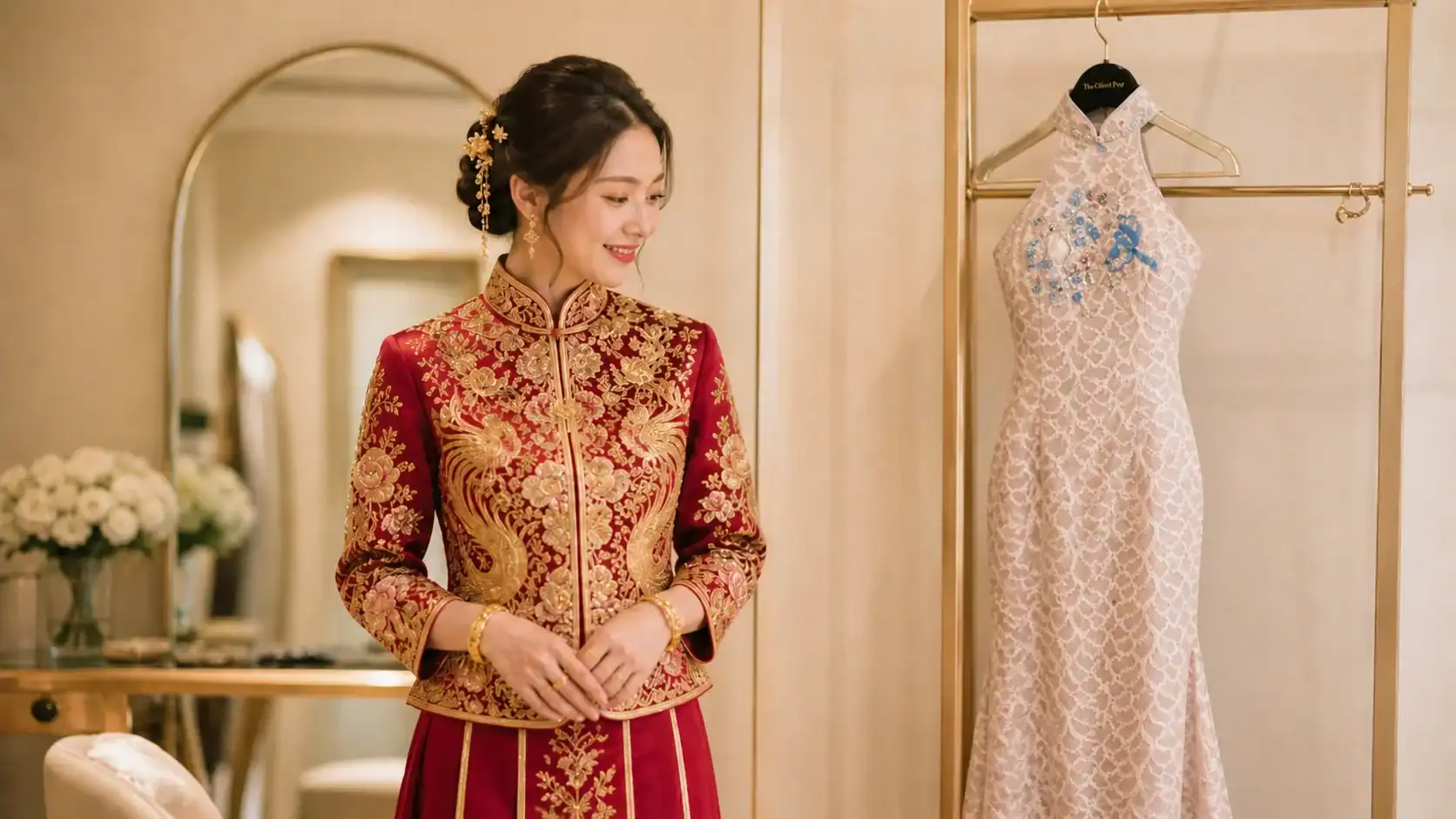
The tea ceremony is one of the most meaningful moments in a Chinese Singapore wedding. It’s the formal act of honouring your elders, presenting yourselves as a married couple, and receiving their blessings. And the dress you wear during it carries that same weight.
Most brides choose between two traditional options: the qun kua (often called the kua), a two-piece embroidered ceremonial gown rooted in centuries of Chinese tradition, or the cheongsam (qipao), a fitted dress that balances cultural heritage with modern elegance. Both are beautiful. Both are appropriate. The right choice depends on your family’s expectations, your aesthetic, your comfort, and how long you’ll be wearing it.
This guide covers everything you need to know to make that decision with confidence, including how the two garments differ, what they cost to rent or buy in Singapore, how to style each for your ceremony, and what to look for when you’re shopping.
|
Key Takeaways
|
What Is the Difference Between a Kua and a Cheongsam?
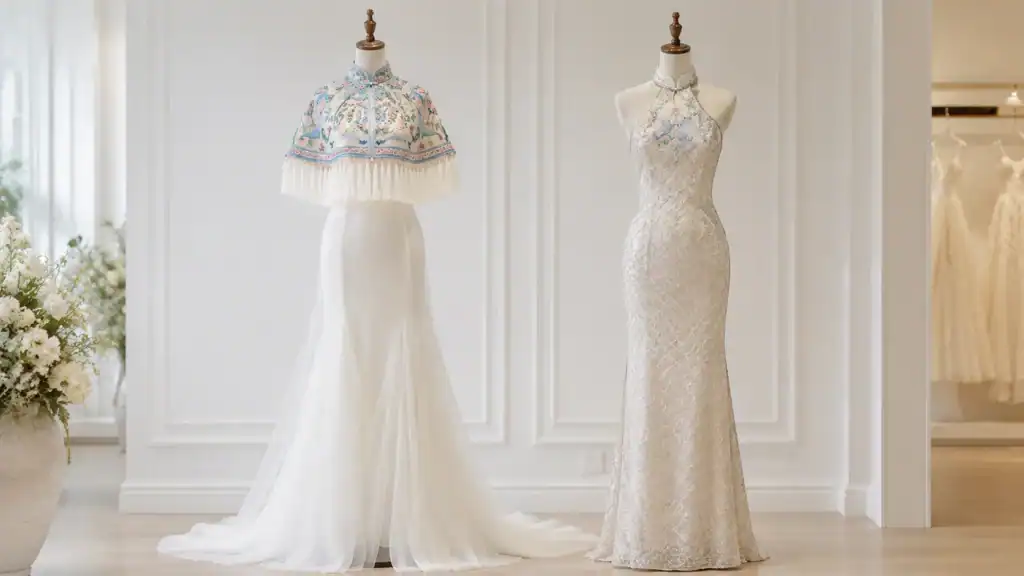
In Singapore’s Chinese wedding tradition, the kua rental market starts from around S$180 for the bride’s set, with the groom’s matching ma kua adding S$150 to S$250 more (The Red Wedding, 2025). The cheongsam typically costs from S$300 to rent. Both garments are rooted in Chinese heritage but represent quite different aesthetics and levels of ceremony.
|
Feature |
Kua (Qun Kua) |
Cheongsam (Qipao) |
|
Silhouette |
Two-piece: embroidered jacket + skirt |
One-piece fitted dress |
|
Symbolism |
Dragon (groom) + phoenix (bride): auspicious union |
Elegance, femininity, cultural heritage |
|
Formality |
Highly ceremonial, traditional |
Versatile: traditional to modern |
|
Embroidery |
Heavy gold/silver thread, intricate |
Ranges from minimal to ornate |
|
Ease of movement |
Looser fit, easier for kneeling |
Form-fitting; choose carefully for bowing |
|
Rental cost (SG) |
S$180 to S$800+ |
S$300 to S$800+ |
|
Purchase cost (SG) |
S$500 to S$2,000+ |
S$400 to S$1,500+ |
|
Rewear potential |
Limited; often framed as heirloom |
Can be reworn for formal occasions |
One distinction that often surprises brides: the kua is traditionally a two-piece set, which means it reads as more voluminous and structured than the cheongsam’s fitted silhouette. This matters in photographs taken during the ceremony. The kua tends to photograph with more ceremonial gravitas; the cheongsam reads as more refined and intimate. Neither is more correct, but the difference is worth seeing in person before deciding.
When Should You Choose the Kua?
The kua is the more traditional choice and carries the deepest cultural weight. Its red and gold embroidery, featuring the dragon and phoenix motifs that symbolise a harmonious union, makes it the garment most closely associated with the Chinese wedding ceremony. For families where tradition matters and where grandparents or elders are present at the ceremony, the kua is often expected.
It’s also a practical choice if your tea ceremony involves a lot of kneeling, bowing, and movement between locations. Because the kua is a two-piece rather than a fitted sheath, it allows more freedom of movement than many cheongsam styles.
Choose the kua if:
- Your family has strong ties to Chinese tradition, and your elders expect traditional dress.
- Your tea ceremony is a separate, standalone event rather than a quick pre-banquet moment.
- You plan to frame or preserve the garment as a family heirloom.
- Comfort for repeated kneeling and bowing is a priority.
The kua is also often the more photographically striking choice in traditional settings, particularly when paired with gold accessories and traditional hair ornaments.
When Should You Choose the Cheongsam?
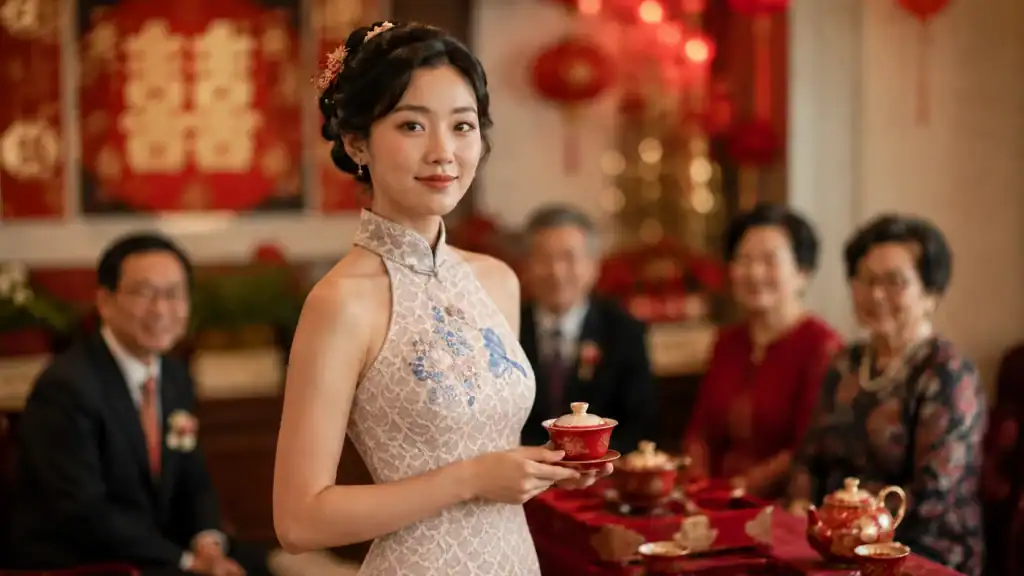
The cheongsam has become increasingly popular among Singapore brides who want cultural resonance with a more contemporary aesthetic. Modern cheongsams range from sleek, minimalist styles in rich silk to lace-overlay versions with illusion necklines and updated silhouettes like A-line or mermaid cuts. They’re more wearable after the wedding, and many brides choose one they can return to for formal occasions.
The cheongsam also works well when the tea ceremony is integrated into a larger wedding day programme rather than held as a separate, standalone event. Because it’s one piece and more streamlined, it transitions more quickly between moments, which matters when your schedule is tight.
Choose the cheongsam if:
- You want a traditional look with a more modern silhouette.
- Your tea ceremony is brief or integrated into the banquet programme.
- You’d like a garment you can wear again after the wedding.
- You prefer a more fitted, refined aesthetic over ceremonial volume.
- Your family is open to a modern interpretation of Chinese bridal dress.
At House of Ivory, we find that brides who are undecided between the kua and cheongsam almost always arrive at a decision quickly once they try both on. The fit, the weight, and the way each garment makes you feel in person are very different from how it looks on a hanger or in a photograph. We always recommend booking a consultation before committing to either.
How Much Does a Tea Ceremony Dress Cost in Singapore?
Renting a kua in Singapore starts from approximately S$180 for a bride’s set, with more intricately embroidered pieces ranging from S$300 to S$800 or more. The groom’s matching ma kua typically adds S$150 to S$250 to that total (The Red Wedding, 2025). Cheongsam rental starts from around S$300 and can reach S$800 or more for couture or bespoke pieces.
|
Item |
Rental (SGD) |
Purchase (SGD) |
Notes |
|
Bride’s kua |
S$180 to S$800+ |
S$500 to S$2,000+ |
Embroidery density affects price significantly |
|
Groom’s ma kua |
S$150 to S$250 |
S$300 to S$800 |
Often rented as a set with the bride’s kua |
|
Cheongsam (standard) |
S$300 to S$600 |
S$400 to S$1,000 |
Modern styles; wider availability |
|
Cheongsam (couture/bespoke) |
S$600 to S$800+ |
S$1,000 to S$1,500+ |
Custom-fit; longer lead time required |
|
Accessories (headdress, pins) |
S$50 to S$200 |
S$100 to S$500+ |
The traditional head dress is often rented separately |
Most brides in Singapore rent their tea ceremony dress rather than purchase it, given that it’s worn for a relatively short portion of the day. Purchasing makes sense if the piece has significant sentimental value, if it will be passed down as a family heirloom, or if you have a custom design in mind that doesn’t exist in a rental catalogue.
Budget note: Build in a 15 to 20 per cent buffer for alterations, pressing, and any boutique fees not included in the base rental price.
How Do You Style a Kua or Cheongsam for a Singapore Tea Ceremony?
Your tea ceremony dress doesn’t exist in isolation. It’s one outfit in a full day of looks, and the styling choices you make, from hair and accessories to the transition to your next gown, will affect how the entire day flows visually and logistically.
Hair and accessories
The kua traditionally pairs with an elaborate headdress, often a phoenix crown or beaded hair ornament, along with gold jewellery. If you’re wearing a cheongsam, the hair styling is more flexible: an elegant updo, a structured low bun, or soft waves all work well depending on the neckline.
The key thing to discuss with your HMUA is the transition: if you’re moving from the kua or cheongsam into a Western gown for the solemnisation, your hair and makeup need to work across both looks or be adjusted efficiently. Plan this briefing, not on the day.
Transitioning to your next look
Allow 20 to 30 minutes for the change from your tea ceremony dress to your main ceremony gown. If your HMUA needs to restyle your hair significantly between the two looks, allow up to 45 minutes. The kua’s two-piece construction typically makes it faster to remove than a fitted cheongsam, which is worth factoring in if your schedule is tight.
For full guidance on managing transitions across all your wedding day outfits, our Complete Singapore Wedding Outfit Planning Guide covers timelines and logistics across every ceremony moment.
What Should You Look for When Shopping for a Tea Ceremony Dress?
Shopping for your tea ceremony dress is a different experience from bridal gown shopping. The cultural weight of the garment, the specific occasion it serves, and the practicalities of the ceremony all matter. Here’s what to consider at each stage.
Based on our experience at House of Ivory, brides who start their tea ceremony dress search at least three months before the wedding date have significantly more options available to them, particularly for bespoke or custom-fit cheongsams, which typically require six to eight weeks of lead time. Leaving it to the last month often means choosing from whatever is available in the rental catalogue rather than what you actually want.
Book early for bespoke pieces
Custom cheongsams in Singapore generally require six to eight weeks of lead time, sometimes longer for complex embroidery or couture construction. If you want a bespoke piece, start this process three to four months out from your wedding date.
Try before you commit
Fit matters enormously with both the kua and cheongsam. The kua’s embroidered panels need to sit correctly on your frame; the cheongsam needs to allow you to kneel, bow, and move without restriction. Always try on before confirming a rental or purchase.
Ask about alterations
Most rental boutiques include basic alterations in the rental fee, but confirm this before signing. Hem adjustments, waist taking-in, and sleeve length are common. Factor in the alteration timeline alongside your overall wedding schedule.
Check what’s included
Some rentals include accessories such as the headdress or hairpins; others charge separately. Confirm the full package before comparing prices across boutiques.
At House of Ivory, our cheongsam collection spans traditional and contemporary styles, with options for both rental and purchase. Our styling team can help you find a piece that works within your full wedding day wardrobe, not just as a standalone outfit.
|
Find Your Tea Ceremony Dress at House of Ivory Whether you’re drawn to the ceremonial grandeur of the kua or the refined elegance of the cheongsam, our team at House of Ivory can help you find the right piece for your tea ceremony and your full wedding day wardrobe. Book a personalised styling consultation at our flagship boutique at 36 Armenian Street, Singapore. |
Frequently Asked Questions
Is the kua or cheongsam more appropriate for a Singapore Chinese tea ceremony?
Both are culturally appropriate. The kua is the more traditional and ceremonial choice, often expected by older family members. The cheongsam offers a more modern interpretation of Chinese bridal dress. The right choice depends on your family’s preferences and your own aesthetic.
Can I wear a cheongsam for the tea ceremony and a kua at the banquet?
Yes, some brides reverse the convention by wearing a cheongsam for the tea ceremony and changing into a kua for a ceremonial march-in at the banquet. It’s unconventional but entirely a matter of personal preference. Discuss with your family to ensure the order feels right for your celebration.
How far in advance should I book my tea ceremony dress in Singapore?
For rental pieces, three months ahead gives you a strong selection. For bespoke or custom-fit cheongsams, allow at least four to six months as these typically require six to eight weeks of construction time plus fittings. Popular boutiques in Singapore book out quickly in peak wedding season.
What colour should my tea ceremony dress be?
Red is the traditional and most common colour for tea ceremony dresses in Chinese weddings, as it represents luck, prosperity, and happiness. Gold, deep pink, and burgundy are modern alternatives. Avoid white or ivory, which are associated with mourning in Chinese tradition.
Can I rent a kua or cheongsam from a Western bridal boutique in Singapore?
Some boutiques that specialise in Western gowns also carry traditional Chinese pieces. House of Ivory stocks a curated range of cheongsams alongside its Western bridal collection, allowing brides to consider all their outfit needs through one consultation rather than visiting multiple boutiques.