
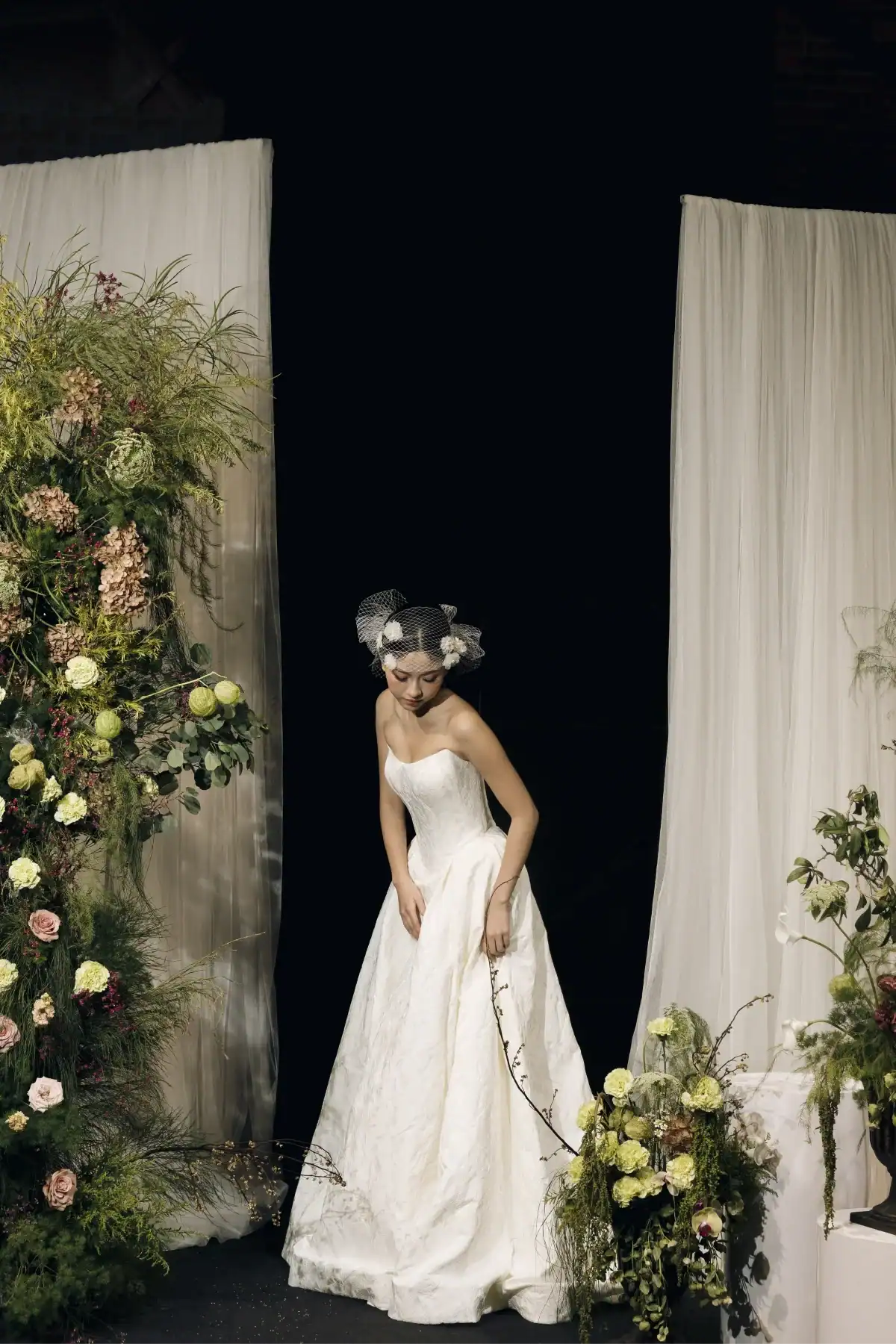
Every wedding dress belongs to one of a handful of core silhouettes, and once you know them, shopping gets dramatically easier. This guide explains the main types of wedding dresses, how each behaves in Singapore’s heat and venues, and how to narrow the field to the styles worth trying on at your first appointment.
Key Takeaways
- Six core silhouettes cover almost every gown: A-line, ball gown, mermaid, trumpet, sheath and fit-and-flare.
- Singapore’s mean annual humidity is around 82% (Meteorological Service Singapore), so fabric weight matters as much as shape.
- Venue drives the choice: structured styles suit ballrooms, lighter ones suit gardens.
- Try at least two contrasting silhouettes at your first fitting.
What Are the Main Types of Wedding Dresses?
Almost every gown you’ll try on is a variation of six silhouettes. The name describes the shape of the skirt and where it flares: an A-line skims out gently from the waist, a ball gown flares dramatically, a mermaid hugs the body to the knee, and a sheath follows your line from shoulder to hem.
|
Silhouette |
Shape |
Best for |
Worth knowing |
|
A-line |
Fitted bodice, skirt flares gently from the waist |
Nearly every body shape and venue |
The most versatile starting point |
|
Ball gown |
Fitted bodice, full dramatic skirt |
Grand ballrooms, formal banquets |
The heaviest style to wear all day |
|
Mermaid |
Fitted through hip and thigh, flares at the knee |
Statement entrances, evening banquets |
Restricts stride; practise sitting |
|
Trumpet |
Fitted through the hip, flares mid-thigh |
Shape with more freedom of movement |
The mermaid’s softer cousin |
|
Sheath/column |
Follows the body in one clean line |
City weddings, ROM, minimalist looks |
Lightest option in humid weather |
|
Fit-and-flare |
Fitted top, flare from the upper hip |
Dancing-heavy receptions |
Balances drama and ease |
For how each shape flatters different figures, see our guide to bridal gown styles for every body type.
Which Wedding Dress Styles Suit Singapore’s Climate?
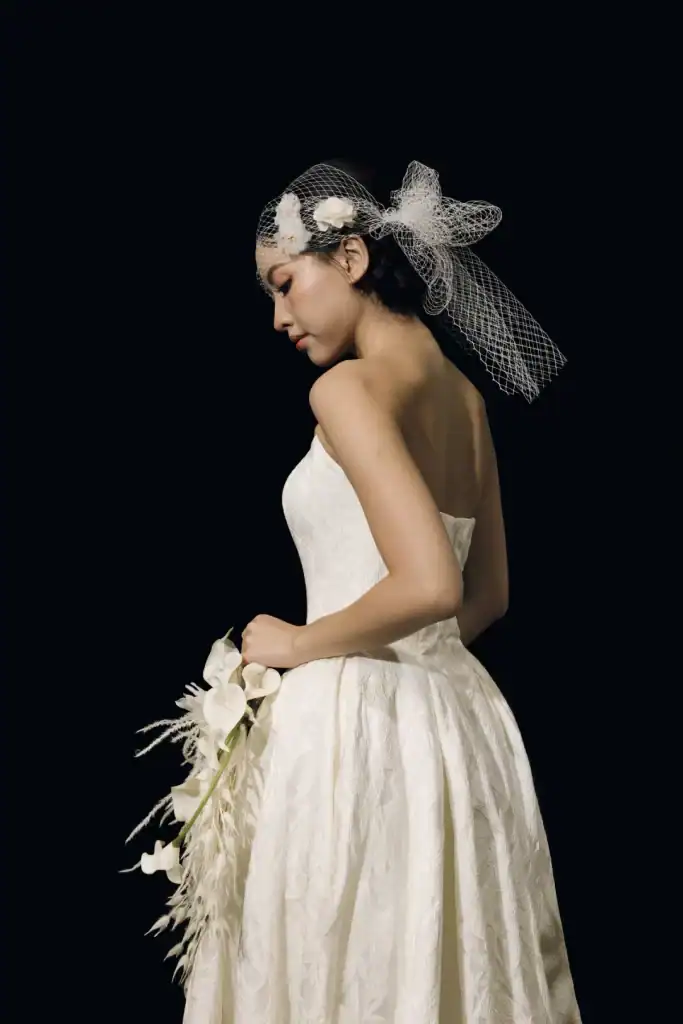
Weight and layering decide comfort here. The Meteorological Service Singapore puts mean annual relative humidity at around 82%, which is why a full tulle ball gown feels very different at an outdoor solemnisation than in an air-conditioned ballroom. Lighter silhouettes in crepe or chiffon breathe best outdoors.
As a rule, sheaths, A-lines and fit-and-flare gowns in breathable fabrics handle garden ceremonies well, while ball gowns and mermaids are happiest indoors. Our wedding dress fabrics guide covers the materials in detail, and if you’re planning several looks across the day, our Singapore wedding outfit planning guide shows how brides sequence them.
Do Necklines and Details Matter as Much as Silhouette?
Yes, but they’re the second decision, not the first. Silhouette sets the shape; necklines, backs and embellishment set the personality. A clean crepe A-line reads modern with a square neck and romantic with an off-shoulder line, which is why stylists lock in shape before details.
Labels lean differently here. Cizzy Bridal pairs clean silhouettes with modern necklines and refined backs, and our Australian bridal designers guide compares how each house handles detailing. Footwear rounds it out: heel height changes both hem length and posture, covered in our wedding shoes guide.
How Do You Choose a Wedding Dress Style?
Work from venue, to movement, to mood, in that order. An outdoor solemnisation after registering with the Registry of Marriages calls for light fabrics and ease; a hotel banquet rewards structure. Then ask how much you want to move: dancing, tea ceremonies and tight schedules all punish restrictive cuts.
Many Singapore brides also plan a cheongsam or kua for the tea ceremony, so the gown doesn’t need to do every cultural job on its own; our kua or cheongsam guide covers that decision. At your first fitting, ask to try two contrasting silhouettes; the comparison teaches you more than ten similar gowns.
Frequently Asked Questions
What is the most flattering wedding dress style?
A-line gowns are widely considered the safest starting point because the gentle flare balances most proportions. Flattering is personal, though: mermaids celebrate curves, sheaths elongate petite frames, and ball gowns balance broader shoulders. Try contrasting shapes before ruling anything out; photographs often change minds.
Which wedding dress style is most comfortable for a full day?
Lighter silhouettes with less structure: sheaths, soft A-lines and fit-and-flare cuts in crepe or chiffon. Comfort also depends on boning, lining and fit through the hip, which is why alterations matter as much as the style you pick.
Can I wear a jumpsuit or two-piece instead of a gown?
Absolutely. Bridal jumpsuits and two-piece sets work well for ROM ceremonies and second looks; they photograph beautifully in city settings, and they free you to move. Many brides pair one with a fuller gown for the banquet.
How many wedding dress styles should I try on?
Aim for two or three contrasting silhouettes in your first session rather than many similar gowns. Contrast teaches you quickly what your body and venue want, and most brides shortlist within five gowns once the silhouette is settled.